movement
Kettlebell High Pull
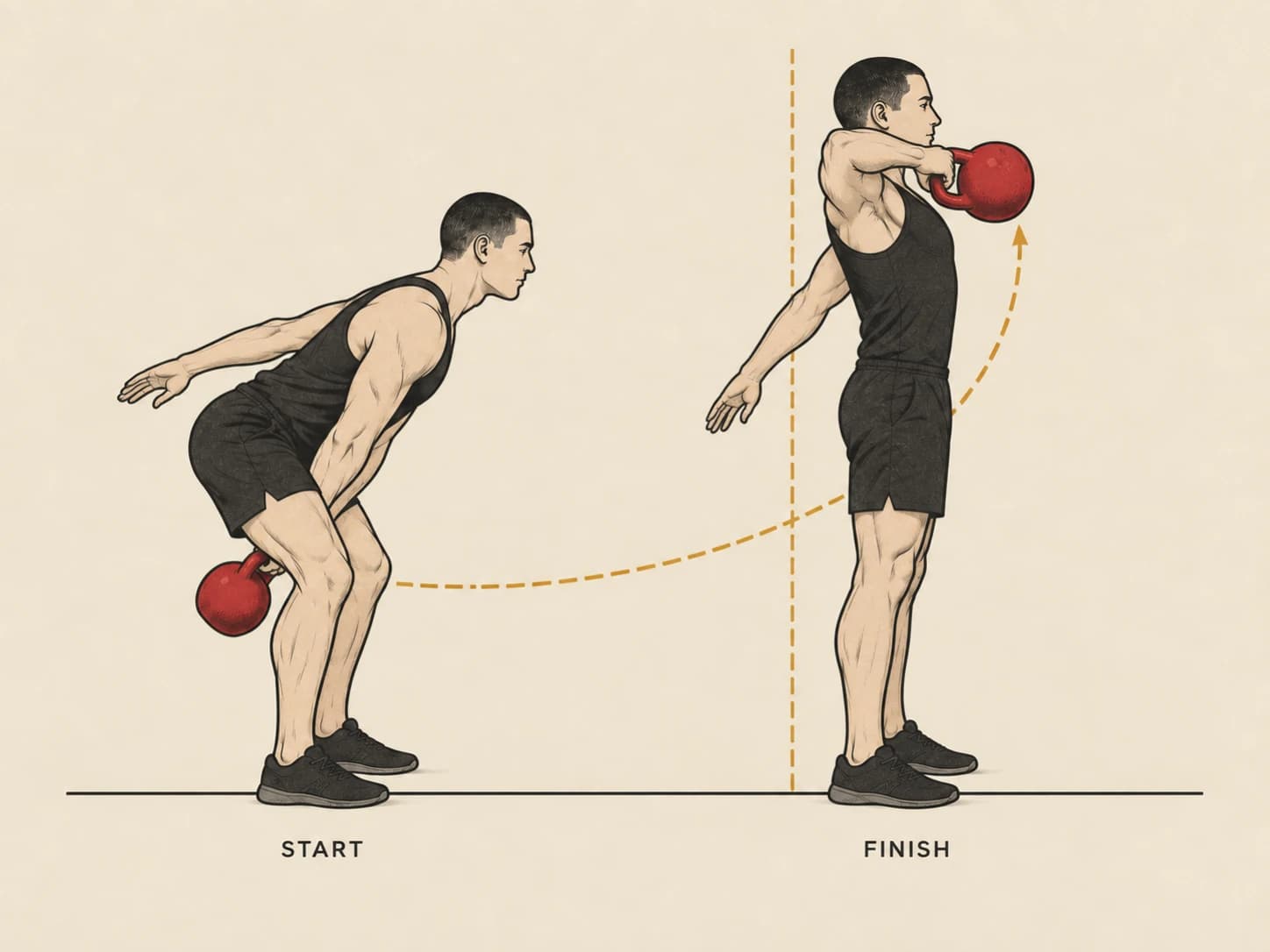
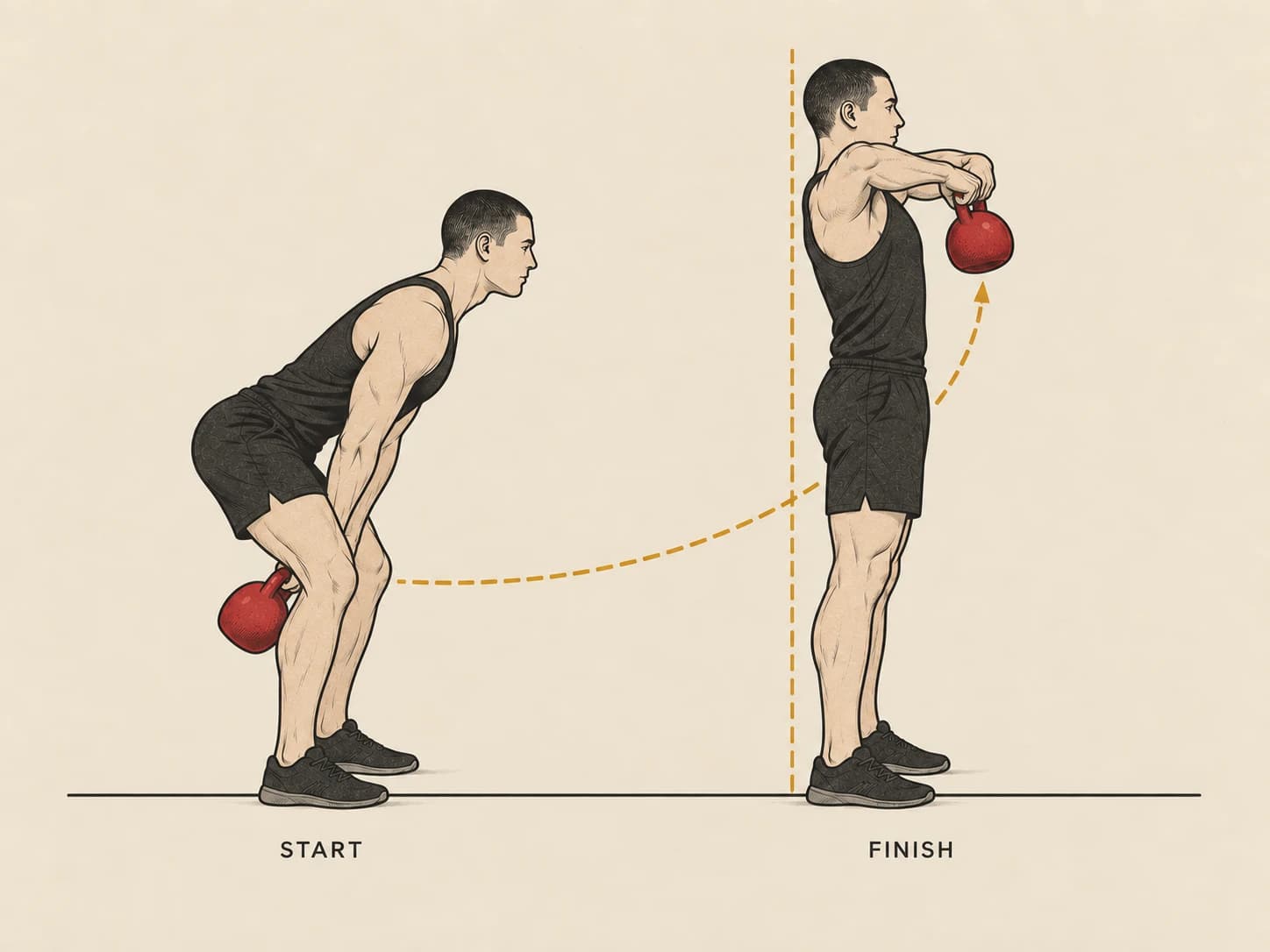
The high pull is a ballistic movement, one-arm or two-handed, that drives a kettlebell from a hike-pass between the legs to chest or chin height, with an aggressive elbow-back finish. The bell stops at the apex rather than continuing overhead. The pattern bridges the swing and the snatch — same hip drive, higher pull vector, no overhead lockout.
Mechanics and load path
The high pull starts from a standard hike-pass and hip-drive snap, identical to the swing setup. The split happens at the upward arc. Instead of letting the bell float forward at chest height, the elbow drives back and high, accelerating the bell into a vertical-and-back trajectory.
The elbow leads the path. The grip stays passive on the handle. The bell finishes near the chin or upper chest, with the elbow above the hand and behind the head. The torso stays vertical, not leaning back into a behind-the-line lockout position.
The high pull is a snatch-progression tool. Athletes who own the swing but cannot yet absorb a snatch lockout at the wrist learn the snatch pull mechanic via the high pull first. The chin-height finish removes the overhead absorption risk while preserving the aggressive vertical pull.
In the Kettlebell Complex protocol
One-arm high pulls run the pull-to-overhead station of the Conditioning Flow complex across all three weeks (S2, S8, S14), sitting inside the complex chain alongside one-arm swings, clean-and-push press, front rack reverse lunges, and one-arm rows at the light tier (12 kg for an intermediate man). Eight reps per side per round. The protocol uses the explicit "One-arm high pulls" naming convention to clarify the unilateral side-rotation pattern.
The chin-height finish keeps the aggressive vertical pull without the overhead absorption risk a snatch carries when wrist alignment erodes under fatigue. The Conditioning days run the high pull and reserve the full snatch for the Power Endurance sessions, where the longer rest protects the overhead lockout. The choice matters most on the W3 Peak, where the rest drops to 45 seconds and an overhead-locked lift would turn risky under peak density.
As a snatch-progression tool the high pull also stands on its own, building toward the density-training the programmed snatch work demands. Athletes who own the swing but cannot yet absorb a snatch lockout learn the pull mechanic via the high pull first.
In the Kettlebell Strength protocol
Program 02 places the high pull in the Ballistic Power EMOM, between the two-hand swing and the one-arm swing. From the same backswing as the swing, the bell is pulled to the chest with a high elbow. It is the next rung up the ballistic arc, the program climbing toward the snatch in the second block.
Used in: Program 01 — Kettlebell Complex · Program 02 — Kettlebell Strength
Foundation Prep · Free
Build the base first.
Twelve emails through six core movements: cues, common errors, and short practice protocols.
12 emails. Unsubscribe anytime.